How do you adjust a sit-stand support to the correct height?
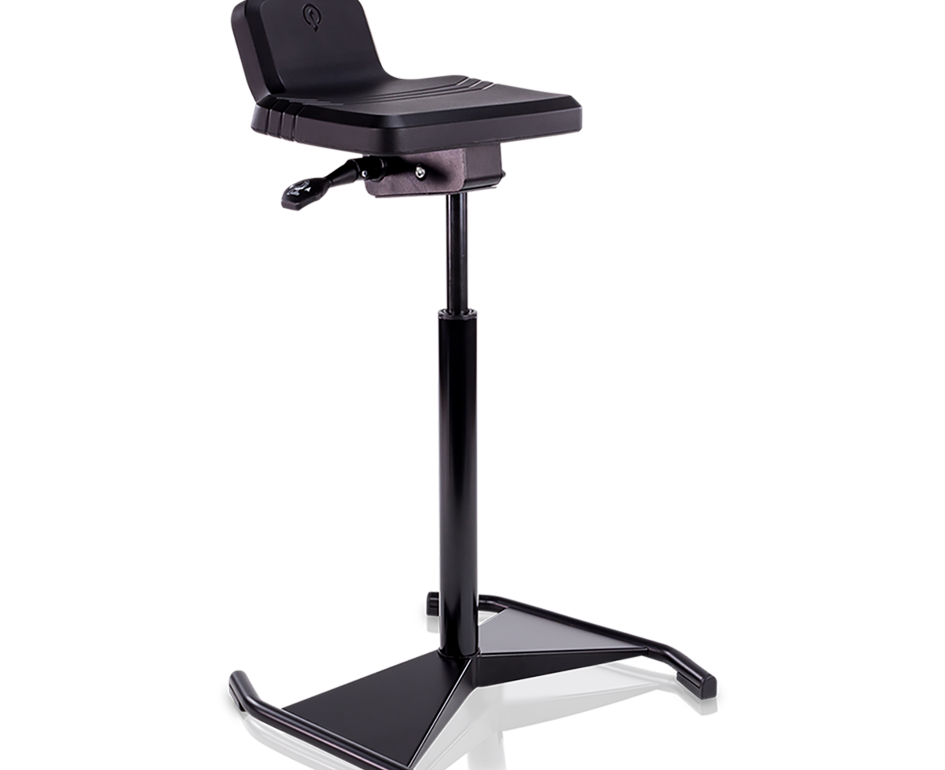
A sit-stand support provides support during tasks that involve regularly alternating between sitting and standing. You can lean against it while keeping your feet in contact with the floor. But how do you determine the correct height?
Why is the correct height important?
Standing for long periods can cause fatigue in your legs and feet. A sit-stand support provides support without requiring you to sit down completely.
It is important that the height suits your body height, working height and tasks.
How do you adjust the height of a sit-stand support?
- Step 1. Stand in front of the sit-stand support
Place your feet firmly on the floor and check that the sit-stand support is stable.
- Step 2. Adjust the seat height
Adjust the seat to a height that allows you to lean against it comfortably. You should be in a position somewhere between sitting and standing.
- Step 3. Check that your feet are properly supported
Make sure both feet remain firmly on the floor. Your legs should still support part of your body weight, while the sit-stand support provides additional support.
- Step 4. Check your working posture
Check that you can work comfortably without bending forward unnecessarily or raising your shoulders. If necessary, adjust the height of the sit-stand support or your workstation.
When should you use a sit-stand support?
A sit-stand support can be suitable for workplaces where you spend a lot of time standing but would benefit from occasional support. Examples include certain production, assembly or reception tasks.
Whether a sit-stand support is suitable depends on your tasks, the available space and the freedom of movement required.
Keep alternating between sitting, standing and moving
A sit-stand support provides support but does not replace regular movement. Change your working posture whenever possible and avoid remaining in the same position for long periods.

 You can only compare three products. Remove one of your existing products to add your selected product to the comparison.